
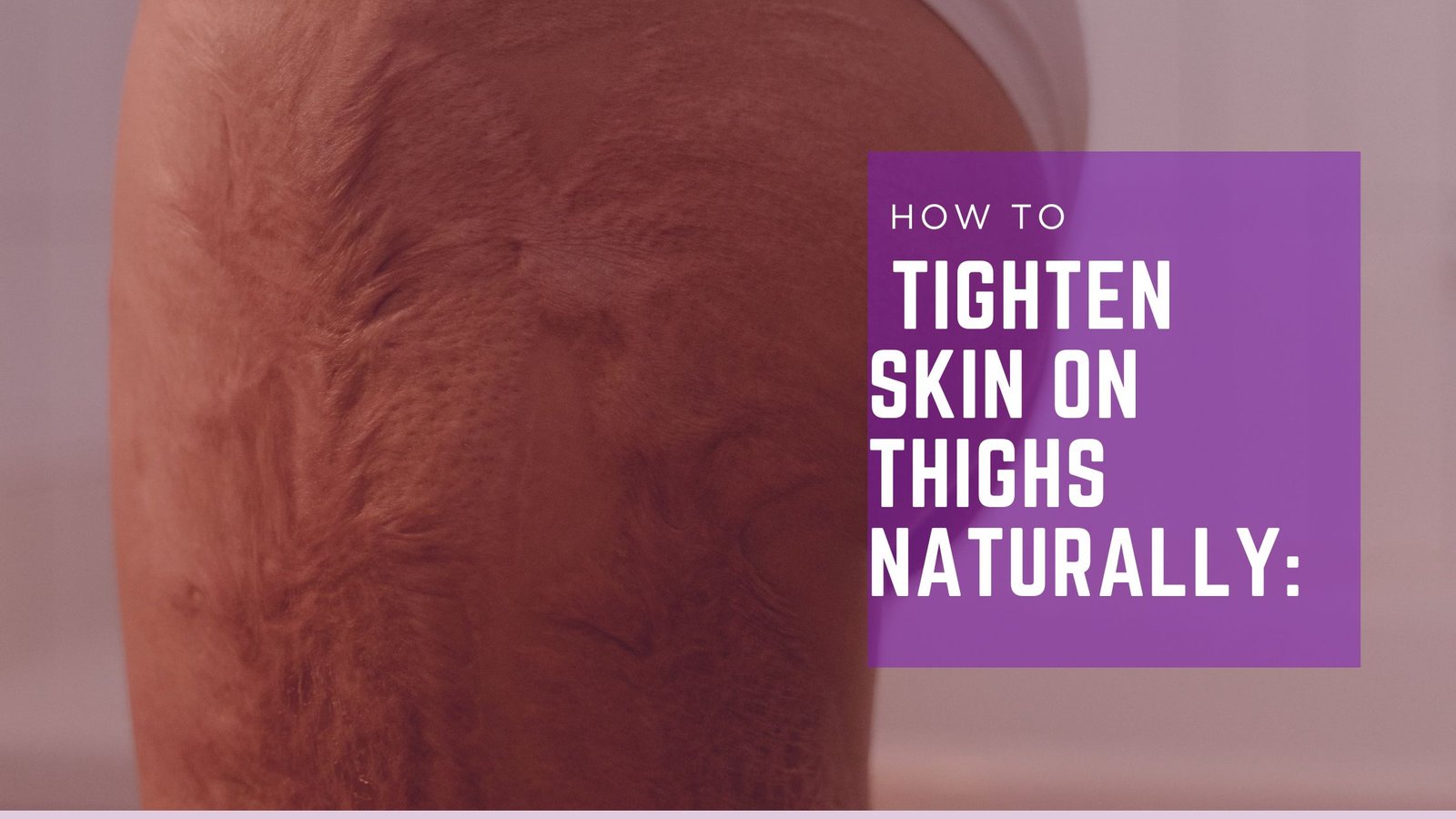
If you’ve noticed that the skin on your thighs has become a little less firm than it used to be, you are not imagining things, and you are absolutely not alone.
Loose thigh skin is one of the most common concerns in the women’s wellness community. But I’ve got good news for you, you don’t need surgery or expensive clinic treatments to get rid of it.
There are proven, natural methods that, when applied consistently, can meaningfully improve the firmness and appearance of the skin on your thighs.
And in this guide ill break every single one of them down for you, but before we begin lets quickly look at why loose thigh skin occurs in the first place.
Why Does Skin on the Thighs Loosen in the First Place?
Now, before we talk about how to Tighten Skin on Thighs Naturally, it’s best to understand the root cause first. There are two major proteins that are responsible for the firmness and elasticity of your skin, and they are collagen and elastin.
When these two proteins combine, they act like a structural scaffold, keeping skin taut and resilient. The only problem is that collagen production begins declining at around age 25 at a rate of roughly 1% per year. By your 50s, you may have lost over 30% of your skin’s collagen baseline. But that’s not the only declining factor. Several other factors accelerate this process, and they are;
- Significant weight loss, rapid changes, stretch, and then fail to retract skin
- During pregnancy, the skin expands during gestation and may not fully bounce back postpartum.
- UV exposure to sunlight degrades collagen in the skin’s deeper layers
- Poor nutrition and dehydration both directly impair the body’s ability to produce and maintain collagen
- Smoking reduces blood flow and collagen synthesis
The thighs are particularly vulnerable because they carry a higher concentration of fat cells and are subject to constant movement and friction. But the good news is that those same factors that cause looseness are the ones you can influence, and that’s where natural methods come in.
MUST READ==> Why You Can’t Lose Fat in the Areas of Your Body You Want And What You Should Do Instead
7 Natural Methods to Tighten Skin on Your Thighs
1. Resistance Training That Targets the Thigh Muscles
If you are wondering how to Tighten Skin on Thighs Naturally, one of the most effective ways you can do that is to improve the appearance of loose thigh skin by building the underlying muscle. When the muscles beneath the skin become more developed, they fill out the area and create a firmer, more toned look from the inside out.
Focus on compound movements that engage multiple muscle groups in the thighs:
- Squats are excellent for targeting the quadriceps and glutes
- Lunges will help you build muscle definition in the inner and outer thighs
- Leg presses are low-impact but highly effective for overall thigh tone
- Deadlifts engage the hamstrings and the posterior chain
Do these exercises for 3–4 sessions per week. You obviously don’t need a gym to get all these done. With your bodyweight, you can do squats and lunges at home, and they can be done consistently, while still delivering results over time.
2. Eat Collagen-Boosting Foods Daily
One of the best ways you can ensure skin firmness is through your diet. Skin health is an inside job, and what you eat directly affects how well your body produces and maintains collagen.
There are foods you are supposed to eat that will ensure yiu produce the right amount of collagen that your body needs, some of them include;
- Bone broth is rich in glycine and proline, the amino acids that form collagen.
- Citrus fruits, kiwi, and bell peppers are high in Vitamin C, which is essential for collagen synthesis.
- Leafy greens (spinach, kale) contain antioxidants that protect existing collagen from breakdown.
- Eggs provide lysine and proline, key building blocks for collagen
- Berries rich in anthocyanins, which have been shown to inhibit enzymes that degrade collagen
- Fatty fish (salmon, mackerel) provide omega-3s that help maintain skin moisture and reduce inflammation
It’s also worth considering a hydrolyzed collagen supplement. A 2024 meta-analysis examining data from over 1,400 participants found that collagen supplementation significantly improved skin hydration, elasticity, and the appearance of wrinkles. While the evidence is still evolving, the safety profile is good, and the potential upside is real.
3. Stay Seriously Hydrated
Hydration is one of the most underrated skin-firming tools available, and it costs almost nothing.
When the body is well-hydrated, skin cells plump up, which reduces the appearance of sagging. Dehydration, on the other hand, makes skin look dull, creased, and less elastic. Aim for at least 8 glasses (about 2 liters) of water per day, and more if you are exercising regularly or live in a hot climate.
Hydrating foods also count. Foods like cucumbers, watermelon, oranges, and leafy greens contribute meaningfully to your daily fluid intake.
4. Dry Brushing to Stimulate Circulation
Dry brushing has been used in wellness traditions for centuries, and there is a practical reason it has endured. Brushing the skin with a firm, natural-bristle brush before showering stimulates blood flow to the surface, which supports the delivery of nutrients to skin cells and may encourage fibroblast activity (the cells responsible for collagen and elastin production).
- To do dry brushing, here are a few steps you need to follow;
- Use a firm natural-bristle brush on dry skin before showering
- Start at the feet and brush upward toward the heart in long, sweeping strokes
- Use circular motions on the thighs for 2–3 minutes
- Follow with a lukewarm shower and a nourishing moisturizer
Do this 3–5 times per week. Over time, regular dry brushing can also help reduce the appearance of cellulite by improving lymphatic drainage.
5. Massage with Firming Oils
Regular massage of the thighs does more than feel good; it can meaningfully support skin health. Research suggests that massage stimulates blood flow and promotes fibroblast activity, the cells that help produce collagen and elastin.
Pair massage with a nourishing oil for added benefit:
- Coconut oil is deeply moisturizing and helps maintain skin suppleness
- Almond oil is rich in Vitamin E, which protects skin from oxidative stress
- Rosehip oil contains retinoids naturally, which support skin cell renewal
Massage your thighs in firm, circular motions for 10–15 minutes daily. Consistency matters more than duration; a shorter daily massage outperforms a longer but less frequent one.
6. Try a Coffee Scrub
Coffee is not just for mornings. As a topical treatment, it has genuine skin benefits. The caffeine in coffee grounds temporarily constricts blood vessels and stimulates circulation, which can reduce puffiness and improve the appearance of skin texture. The antioxidants in coffee also help combat free radical damage that contributes to collagen breakdown.
DIY Coffee Scrub Recipe:
• 3 tablespoons of coarse coffee grounds
• 1 tablespoon of raw honey
• 1 tablespoon of olive or coconut oil
Mix into a paste, apply to thighs in circular motions for 5–10 minutes, then rinse with warm water. Use 2–3 times per week. The mechanical exfoliation also removes dead skin cells, which on its own can make skin look smoother and more refined.
ALSO READ==> Simple Nutrition Rules for Busy Working Women
7. Protect Your Skin from Further Damage
- Prevention is part of the treatment. While you are working to rebuild firmness, it is equally important to stop the factors that accelerate skin laxity.
- Avoid smoking, as it directly impairs collagen synthesis and reduces blood flow to the skin
- Limit alcohol, as it dehydrates the skin and generates free radicals that degrade collagen
- Apply SPF UV radiation is one of the leading causes of premature skin aging; wear sunscreen even on your legs when they are exposed
Avoid yo-yo dieting, repeated cycles of weight gain and loss, which stretch and stress the skin; slow, steady weight management is far kinder to your skin
How long does it take when trying to Tighten Skin on Thighs Naturally?
This is the question everyone wants answered, and the honest answer is: it depends, but most people begin to notice a difference within 6 to 12 weeks of consistent effort.
The degree of improvement depends on several factors, some of which can be how much skin laxity you are starting with, your age, your genetics, and how consistently you apply these methods. Younger skin with mild looseness typically responds faster.
More significant laxity, especially after major weight loss, may require a longer timeline and, in some cases, professional treatments to achieve the desired outcome.
What is true across the board is that combining methods yields better results than any single approach. Strength training plus collagen-supporting nutrition plus consistent massage and hydration creates a compounding effect that no one method can replicate alone.
When to Seek Professional Advice
Natural methods are highly effective for mild to moderate skin laxity. However, if you have experienced significant weight loss (over 25kg) or are dealing with severe sagging, it may be worth speaking with a dermatologist. Non-invasive professional treatments such as radiofrequency therapy, which delivers controlled heat to the deeper layers of the skin to stimulate collagen remodeling, are supported by strong evidence and can complement a natural routine.
A dermatologist can also help you rule out any underlying health conditions and recommend treatments personalized to your skin type and concern levels.
MUST READ==> How to Lose Weight Fast, Naturally, and Permanently
Wrap Up
Tightening the skin on your thighs naturally is entirely achievable, but it requires patience, consistency, and a multi-pronged approach. Build muscle with targeted exercise. Feed your skin from within with collagen-boosting foods and proper hydration. Support circulation through dry brushing and massage. Protect what you have by avoiding known skin-damaging habits.
None of these steps is dramatic. But done together, day after day, they create real, lasting change without a single needle or scalpel.
Your skin has more capacity to renew itself than you might think. Give it the right conditions and the time to do so.