
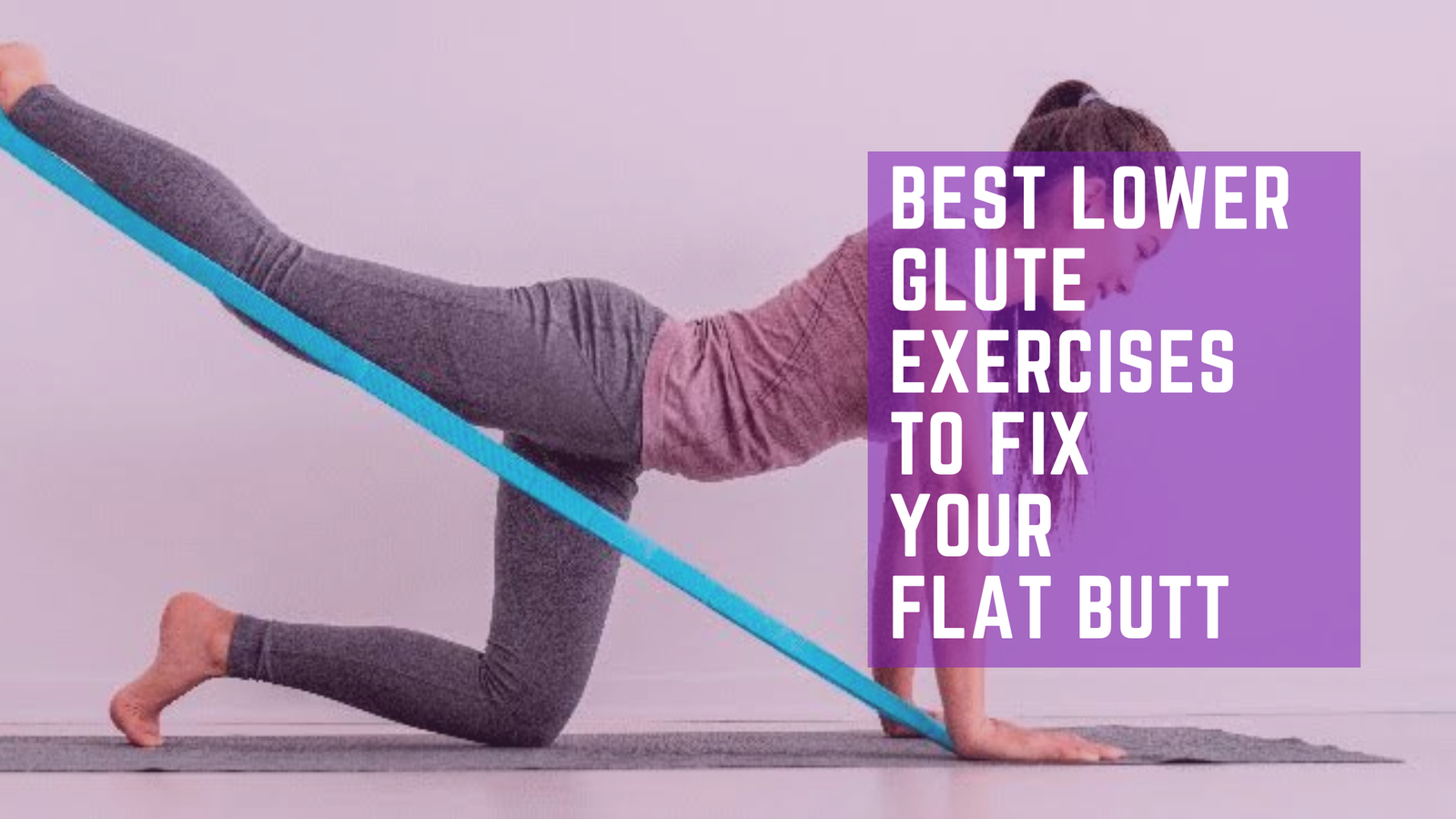
One of the reasons you may have a flat butt is that you have not been prioritizing lower-glute exercises. Sure, you may have been doing hip thrusts, squats, and lunges, maybe even with a resistance band or two. And yet somehow, when you turn sideways in the mirror, you still feel flat.
The good news is this is entirely not your fault, plus it can also be fixed. You just need the right lower glute exercises, done the right way, and a little bit of patience. Which is why in this guide, I will cover the 6 best lower glute exercises to help lift, round out, and shape the lower part of your glutes, along with the training details that actually make the difference between doing an exercise and growing a muscle.
Why do your lower glutes look flat?
When people talk about a flat butt or a lack of underbutt definition, there are usually two things responsible: the bottom portion of your gluteus maximus and the top of your hamstrings, right where the two meet under the crease of your butt.
The gluteus maximus is the largest muscle in the human body by cross-sectional area, and it runs from your pelvis down to your femur. Most of the muscle mass sits up top; that is why hip thrusts and squats build noticeable size in the upper glutes fast. But the lower fibers of the glute max, the ones closest to where your leg begins, respond best to a specific kind of movement: hip extension through a long range of motion, with the hip already bent.
The hamstrings aren’t technically part of the glutes, but they share real estate. They run from the sit bones down to just below the knee, crossing right underneath the lower glute region. A strong, well-developed hamstring, especially at the top near the glute fold, is a big part of what creates that visible crease between your butt and your thigh. Skip hamstring work entirely, and you can build a decent glute max without ever getting that lifted, shelf-like shape people are after.
MUST READ==> 7 exercises that actually help you get a snatched waist like crazy
6 Best Lower Glute Exercises That Will Fix Your Flat Butt
Here are six lower glute exercises that, if done correctly, will fix your flat butt. Keep in mind that you don’t need all six every single week. What matters is consistency and progressive overload, meaning you add a little more weight, a rep, or a set over time.
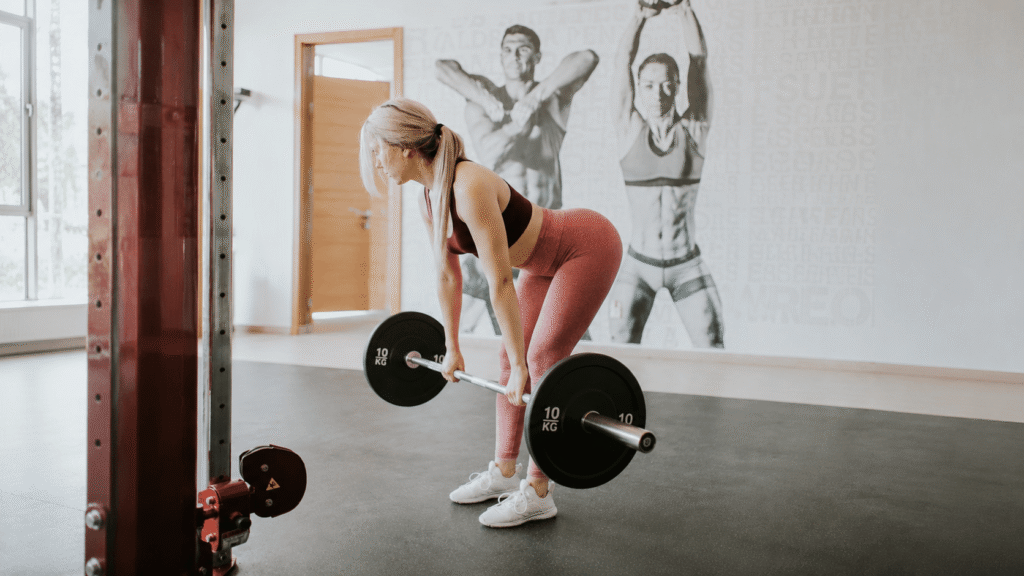
1. Romanian deadlifts (RDLs)
RDLs are arguably the single best lower glute exercise you can do. This is because you never rest the weight on the floor between reps; your hamstrings and lower glutes stay under tension through the entire set, and the hip-hinge pattern takes the hip through a long range of motion under load, exactly the combination that grows the underbutt.
How to do it:
- While standing, hold two dumbbells (or a barbell) in front of your thighs, arms fully extended, knees with a slight bend.
- Then push your hips back and hinge your torso forward, letting the weight travel down the front of your thighs. Keep your back flat and your gaze a few feet ahead of you on the floor.
- Now, lower the weight until you feel a strong stretch through your hamstrings, usually somewhere around mid-shin. Stop there rather than chasing extra range at the cost of a rounded back.
- Reverse the movement by driving your hips forward, squeezing your glutes hard at the top.
If you feel this in your lower back instead of your hamstrings, the fix is almost always the same: drop the weight and slow down. Most people round their spine trying to touch the floor with a weight that’s too heavy for their current hip mobility.
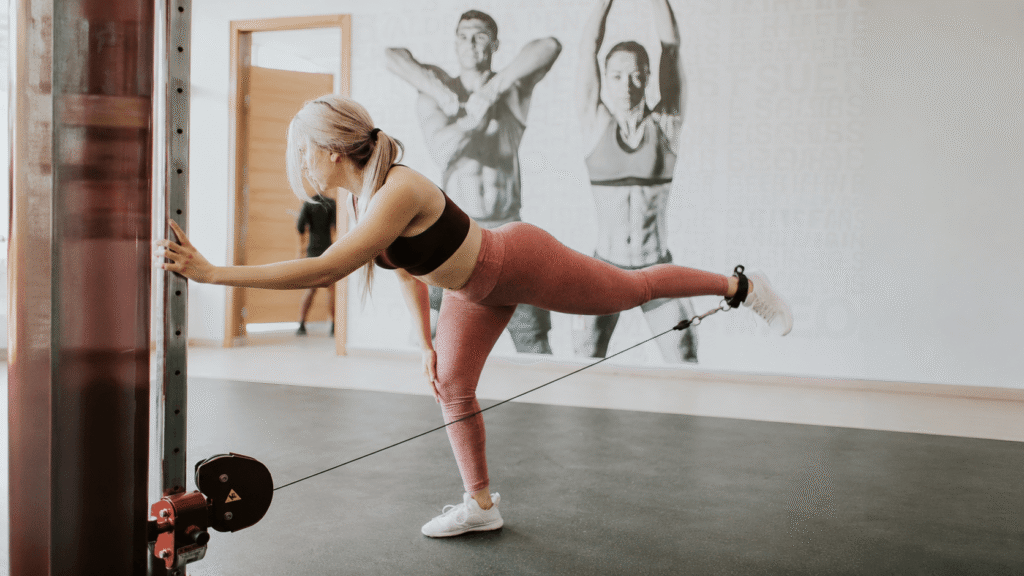
2. Cable kickbacks
Another lower-glute exercise I loveso much is cable kickbacks. The cable provides constant resistance through the full range instead of the variable resistance you get from a resistance band. That constant tension is what makes this one of the better underbutt exercises if you are trying to build your glutes.
How to do it:
- Attach an ankle strap to a low cable pulley and clip it around one ankle.
- Face the machine, hold onto it for balance, and hinge your torso forward slightly.
- Keeping a soft bend in your knee, drive your leg straight back, squeezing your glute hard at the top of the movement.
- Pause for a full second at full extension before returning under control. Don’t let the weight stack yank your leg back to the start.
Slow the eccentric (lowering) portion down on purpose. Most people rush this exercise; that is wrong. You want to let momentum do the work for you; that way, you cut the time your lower glutes spend under tension roughly in half.
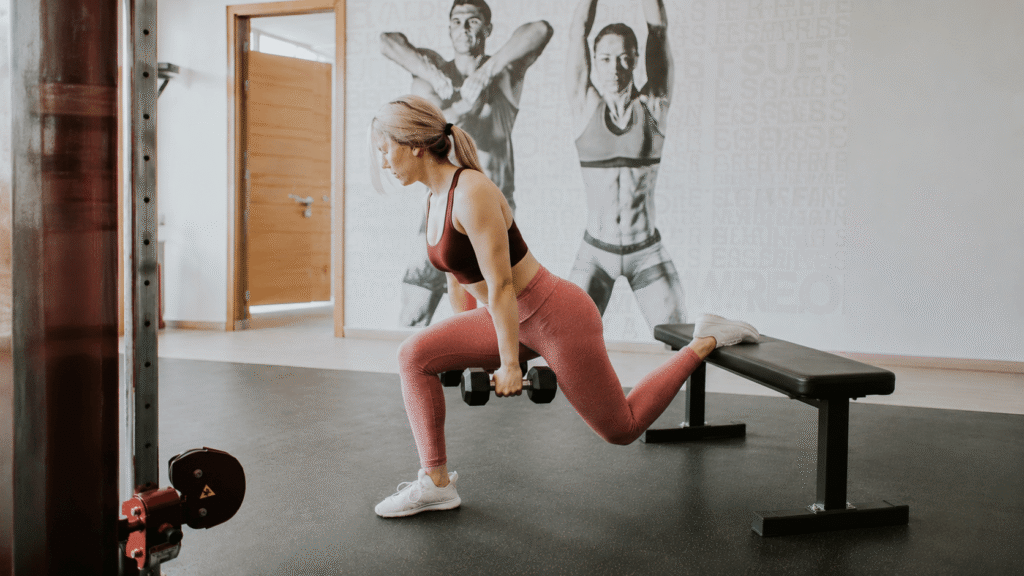
3. Bulgarian split squats
The Bulgarian split squat is one core exercise that puts more load through a single leg’s glute and hamstring than almost any bilateral exercise. And research comparing single-leg to double-leg squat variations has found notably higher glute activation on the working side. Two small adjustments turn a standard split squat into a genuine lower glute exercise: position your front foot far enough forward that your knee stays roughly stacked over your ankle at the bottom, and lean your torso forward slightly rather than staying upright.
How to do it:
- Set up a bench or box behind you at knee height. Rest the top of your back foot on it, laces down.
- Hold a dumbbell in each hand, chest up, and lower straight down until your front thigh is close to parallel with the floor.
- Lean your torso forward over your front leg as you descend, rather than keeping your spine vertical.
- Drive back up by pushing through your front heel and squeezing your glute at the top.
Do all your reps on one side before switching legs. Aim to get your back knee close to the ground without tapping it every rep, since that constant near-touch keeps tension on the muscle instead of resting between reps.
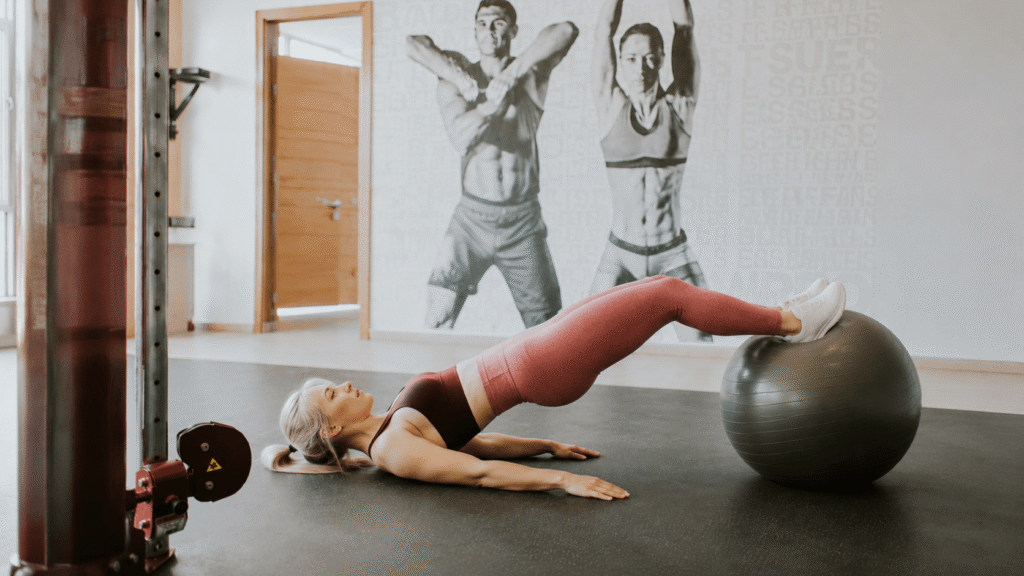
4. Swiss ball hamstring curls
This one is a bodyweight exercise, but don’t let that fool you. Swiss ball hamstring curls combine hip extension and knee flexion in a single continuous movement, which means your glutes and hamstrings fire together for the entire rep instead of trading off. It also demands real core stability, since your hips are unsupported the whole time.
How to do it:
- Lie on your back with your heels resting on top of a Swiss ball, legs extended, arms flat on the floor beside you.
- Press your arms into the floor and lift your hips until your body forms a straight line from shoulders to heels.
- Keeping your hips lifted, bend your knees and roll the ball toward your glutes by pulling your heels in.
- Straighten your legs back out, rolling the ball away, without letting your hips drop toward the floor at any point.
Ten to twelve reps of this is genuinely difficult once your form is right. If your hips sag during the set, that’s your body telling you it’s time to stop, not a sign to push through with worse form.
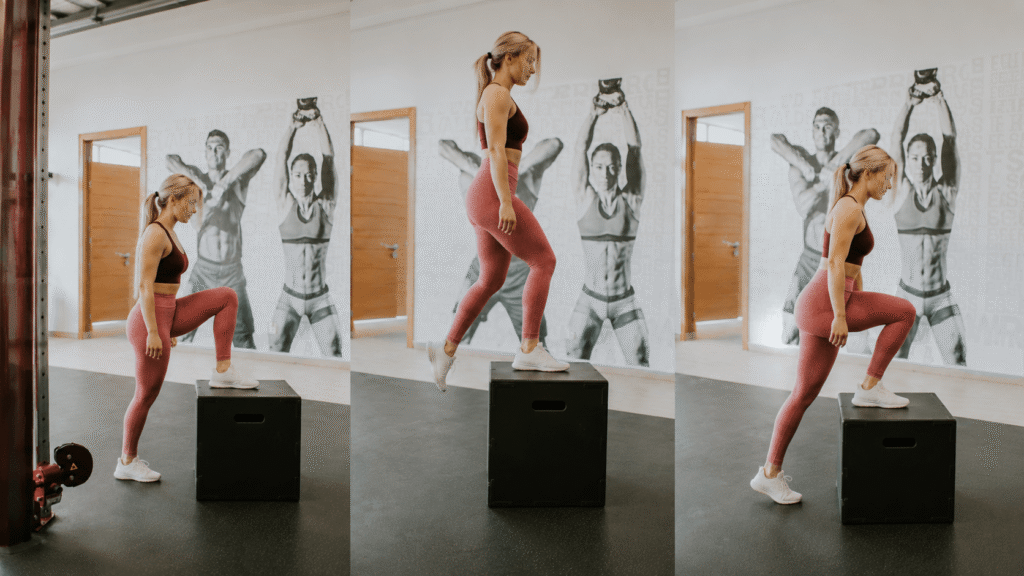
5. High box step-ups
Step-ups onto a box tall enough to require real hip flexion shift that emphasis heavily toward the glutes and away from the quads, compared to a low step-up or a standard lunge. The higher the box, within reason, the more your hip has to flex before you drive up, and that deeper starting position is what recruits the lower glute fibers specifically.
How to do it:
- Set up a box roughly knee height, somewhere between 24 and 30 inches depending on your height and hip mobility.
- Place one foot fully on top of the box, toes forward, and shift your weight into that leg.
- Drive up through your front heel, straightening that leg fully, while your back leg stays relaxed and trails behind.
- Lower back down under control on the same leg. Don’t push off your bottom foot to help.
Control the descent rather than dropping down fast. Slowing the lowering portion down increases how long the muscle spends under tension, which is one of the more reliable drivers of hypertrophy, the technical term for muscle growth.
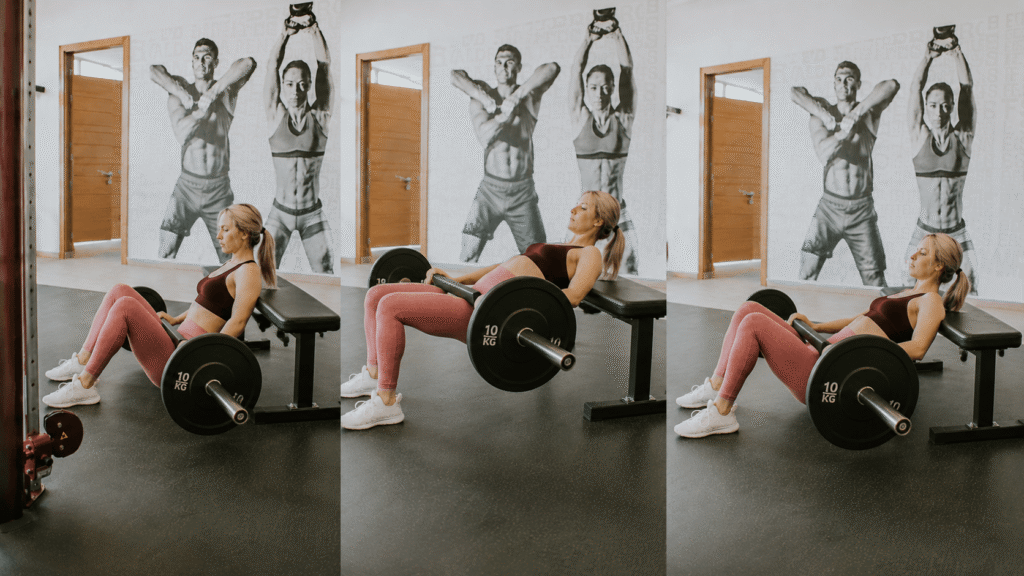
6. Hip thrusts
Hip thrusts get a mention here for a reason, even though the standard version leans upper glute. Widening your rep range and paying attention to hip position changes that. A hip thrust performed with a deliberate pause and a full range of motion, hips dropping until they nearly touch the floor before you drive up, extends the movement enough to bring the lower fibers and hamstrings into play far more than a shallow, bouncy set.
How to do it:
- Sit on the ground with your upper back against a bench, a loaded barbell (or dumbbell) resting across your hips, knees bent, feet flat.
- Drive through your heels, extending your hips until your torso is roughly in line with your thighs, squeezing your glutes hard at the top.
- Lower back down slowly, letting your hips travel close to the floor before the next rep, rather than stopping halfway.
- Keep your chin tucked slightly throughout to avoid overextending your lower back at the top.
The pause and the full range are what separate this from the version most people already do. Cut either one out and you’re back to a mostly upper-glute exercise.
How to build a lower glute workout that actually works
Doing these exercises occasionally won’t move the needle much. Doing them as part of a structured lower glute workout, with the right frequency, volume, and rep ranges, is what actually changes your shape over the coming months.
How Often Should You Do These Lower Glute Exercises
Unless you work out every day, twice a week tends to be the sweet spot. If you can do more than that its fine as well. Keep in mind that training more than that rarely adds extra growth; once the total weekly volume is accounted for, everything you do afterward sometimes just adds unnecessary fatigue.
Per session, 2 to 3 lower glute exercises are enough; pair that with 3 to 4 sets each. So, a realistic session might look like RDLs and Bulgarian split squats, done twice a week, with hip thrusts or step-ups rotated in on alternating weeks to keep the stimulus varied. Remember that this also ties directly into how you eat around training, since a muscle can’t grow past what your diet allows for.
How long until you see results
Within a couple of weeks after you begin training, you will notice some slight changes. But it isn’t muscle growth yet; it’s the post-workout pump. Remember that during lower-glute exercises, extra blood flow to the area temporarily makes your glutes look fuller and rounder for a day or so after training.
The actual muscle growth takes a little longer. According to research tracking hypertrophy over time, it was discovered that measurable changes appear only after four weeks of consistent training, even though these early changes are small enough that they’re not really visible in the mirror yet. For most people who train consistently, eating enough protein and progressively adding weight or reps starts seeing visible differences somewhere around the three-month mark. Again, this timeline will depend on whether you’re building glutes naturally through training alone or combining it with other approaches, so it’s always necessary to temper your expectations accordingly and give the process the months it actually needs.
ALSO READ==> 10 Full-Body Pilates Workouts To Achieve Anime Body
Final thoughts
You should know that a flat butt is not a life sentence. It shouldn’t be what keeps you up at night, but if you are so determined to have it fixed naturally, fixing the gap between your glute max and the hamstrings underneath them with the right lower glute exercises is your best bet. Learn these workouts, train with them with real intent twice a week, and give your body the months it needs, and you will see your glute pop.
You can always start with two or three of these exercises. A rule of thumb is to add them to your existing leg day, and track your weights so you know you’re actually progressing rather than just repeating the same session on autopilot. The shape change will take time and will require more than a single workout, but it’s worth it in the end when you compare it to any shortcut; you’ll find yourself scrolling past another 30-second glute video.