
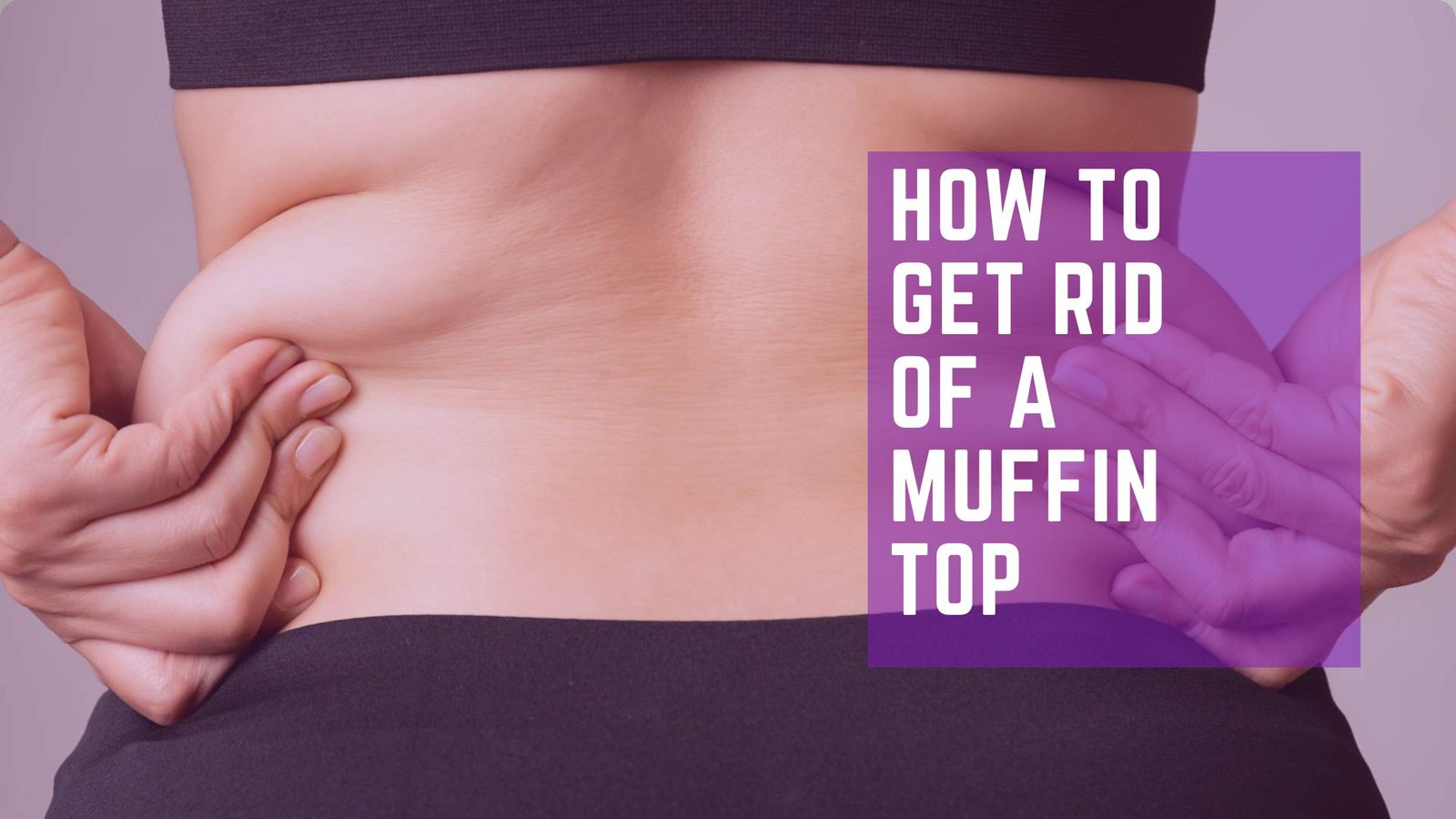
How to Get Rid of a Muffin Top: A Realistic, No-Shame Guide
How to Get Rid of a Muffin Top: No matter how many side bends, crunches, or ab workouts you’ve tried, that stubborn muffin top may still be hanging around. And it’s not because you’re doing anything wrong, no. The problem is that most methods that people rely on to get rid of muffin tops don’t work for reducing fat around the waist.
So, in this article, I’ll walk you through what causes a muffin top, which may not be your fault, by the way, and why it’s so difficult to lose. Then I’ll give you proven strategies that can help you reduce body fat and achieve a slimmer waist in a healthy, sustainable way.
What Is a Muffin Top?
That band of soft fat that sits above the waistband of your pants or skirt, spilling slightly over the edge the way a muffin spills over its paper liner it what we refer to as a muffin top. It’s almost always made up of subcutaneous fat, the layer that sits just under the skin, which is why it’s soft and pinchable rather than firm.
This is quite different from visceral fat; visceral fat lies deeper around your organs and is more closely tied to metabolic health than appearance. A muffin top is mostly a subcutaneous, cosmetic concern, though the two often build up together when overall body fat rises.
It’s also worth knowing that a muffin top isn’t exclusive to any particular body size. Genetics and hormones decide where your body prefers to store fat first, which means even people with relatively low body fat can notice it, while others carrying more weight may barely have one at all.
What Causes a Muffin Top?
Now that you know what a muffin top is, let’s quickly address its causes. There has not been any one cause for a muffin top, but there are factors that contribute to the development of a muffin top, and they are;
Diet
Consistently eating more calories than your body uses gets stored as fat, and the waist is one of the first places many people notice it. Diets heavy in refined carbs, added sugar, and alcohol tend to make this more pronounced.
Hormones
Cortisol (the hormone responsible for stress) and insulin both influence where your body prefers to store fat, and for many people, that’s the abdomen. This is also why hormonal shifts from your cycle, pregnancy, or menopause can make midsection fat feel more stubborn at certain life stages.
Inactivity
A sedentary routine lowers the number of calories you burn each day, which makes a calorie surplus easier to fall into without realizing it, and over time, that shows up around the midsection.
Genetics
Fat storage patterns are largely inherited. If your family tends to carry weight around the middle, your body is more likely to follow that same blueprint.
Stress and Sleep
Chronic stress and poor sleep both elevate cortisol, which can increase cravings for sugary, energy-dense foods and nudge your body toward storing more fat around the waist.
Postpartum Changes
Pregnancy naturally adds fat around the midsection to protect a developing baby, and that tissue can take time to shift afterward, especially with C-section recovery, where scar tissue can make the lower belly area feel more resistant to change.
MUST READ==> Why You Can’t Lose Fat in the Areas of Your Body You Want And What You Should Do Instead
Can You Target a Muffin Top Directly?
The short answer is no! Not really. Spot reduction is a myth. The idea that doing enough crunches or side bends will burn fat from that exact spot isn’t how the body works. When you lose fat, your body draws from stores all over, in an order largely set by genetics, not by which muscle you just worked.
What you can do is lower your overall body fat percentage through a sustained calorie deficit, while strengthening the muscle underneath your waistline so that once the fat does reduce, the area looks more toned and defined rather than just smaller.
How Do I Get Rid of a Muffin Top?
Since you can’t target the area directly, the real answer is to combine a modest calorie deficit, the right mix of training, and a few lifestyle habits that quietly work against you if left unmanaged. Here’s what that looks like in practice.
1. Build a Calorie Deficit
Crash diets backfire because they’re unsustainable, and the weight they take off tends to come back. Aim for a moderate deficit enough to lose fat steadily without leaving you starving or exhausted. A simple way to start: use an online calorie calculator based on your age, height, weight, and activity level, then build meals around lean protein, vegetables, whole grains, and healthy fats like avocado, olive oil, and nuts. Cut back on ultra-processed foods, refined sugar, and alcohol, since these tend to add calories without much nutritional payoff.
2. Combine Cardio With Strength Training
Cardio burns calories and supports the deficit that drives overall fat loss. Strength training builds and preserves muscle, which keeps your metabolism running efficiently as you lose weight and gives your midsection more definition once the fat starts to come down. A mix of both, rather than relying on one alone, tends to produce the most noticeable results over time.
3. Add Core-Strengthening Moves
Core work won’t burn fat off your waist specifically, but it builds the muscle that gives your midsection a firmer, more defined look once your overall body fat drops. A few beginner-friendly options to rotate through a few times a week:
- Plank holds and side planks
- Dead bug
- Bicycle crunches
- Bird dog
- Pilates-style standing or mat core work
Two to three short core sessions a week, alongside your regular training, is enough.
4. Get Stress Under Control
Since cortisol nudges fat storage toward the abdomen, managing stress is doing real work even though it doesn’t feel like “exercise.” Simple, low-effort tools like a short daily walk, slow breathing, journaling, or a few minutes of stretching can meaningfully lower baseline stress over time.
5. Prioritize Sleep
Poor sleep raises cortisol and insulin resistance, both of which work against fat loss. Aim for a consistent 7 to 8 hours, and if that feels out of reach right now, start with one change: a consistent wind-down time or a dark, cool room rather than overhauling everything at once.
6. Give It Time
The waist is often one of the slower areas to respond, even when the scale is moving. Expect visible change over weeks and months, not days, and track progress with photos or measurements rather than the mirror alone, since day-to-day changes are easy to miss.
ALSO READ==> How to Lose Weight Fast, Naturally, and Permanently
What If Diet and Exercise Aren’t Enough?
For some people, a stubborn pocket of fat above the waistband sticks around even after months of consistent habits, often due to genetics, skin elasticity, or scar tissue from a prior C-section. In those cases, some people look into non-surgical body contouring treatments, which generally fall into a few categories:
- Cooling-based treatments that gradually reduce fat cells in a targeted area over several weeks
- Energy-based treatments that stimulate muscle contractions to build core strength alongside modest fat reduction
- Injectable treatments that help break down small, localized pockets of fat over a series of sessions
- Surgical options like a tummy tuck, which remove excess fat and skin directly but come with the recovery time and risks of any surgical procedure
These treatments work best as a finishing step after your habits are already in place, not a substitute for them, and results, recovery time, and candidacy vary a lot from person to person. If you’re considering any of them, a consultation with a licensed provider is the right next step, since they can assess your specific goals and medical history.
How to Keep a Muffin Top From Coming Back
Once you’ve made progress, maintenance comes down to the same habits that got you there just on autopilot rather than high alert. Keep eating in a way that supports your weight rather than fighting it, stay consistent with strength training so your metabolism doesn’t slide backward, and keep an eye on stress and sleep, since both are easy to let slip once the initial motivation fades. Checking in with yourself every few weeks, rather than waiting for clothes to feel tight again, makes it much easier to catch and correct small shifts early.
MUST READ==> How to Tighten Skin on Thighs Naturally